
Old Rehoboth Church & Museum
Old Rehoboth’s small scale is part of its significance. This log church east of Union belonged to a world in which worship could mean gathering in a neighbor’s home and a minister’s arrival depended on a journey between scattered communities. Its history connects a surviving building to the people and repeated journeys that helped a congregation take root.
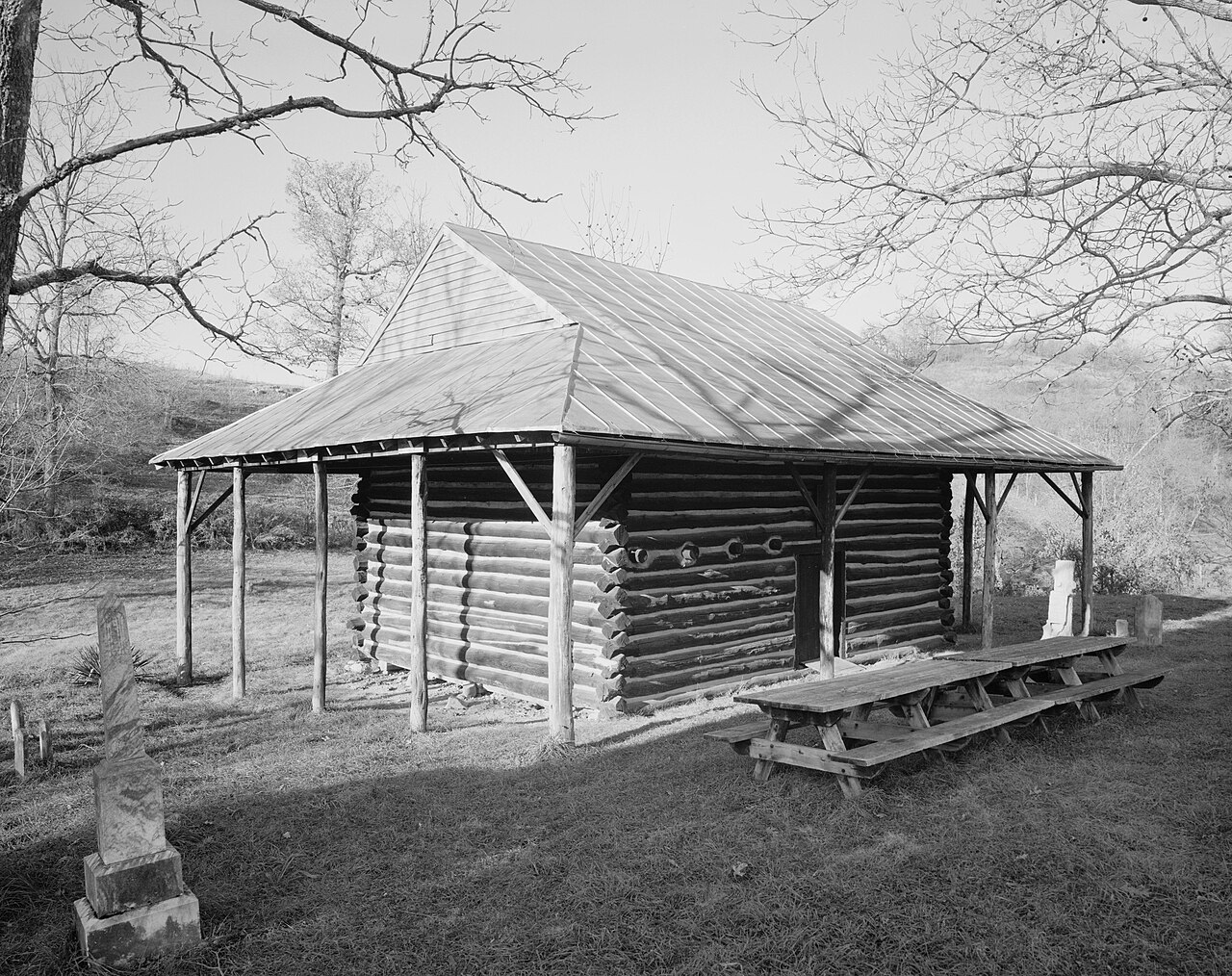

A permanent place for a scattered congregation
The church was dedicated by Francis Asbury in 1786 on land donated by Edward Keenan. Travel Monroe describes a building measuring just 21 by 29 feet—small by the standards of many churches today, but larger than the homes where worshippers had previously met. A dedicated gathering place changed what the community could do together.
The date places Rehoboth well before West Virginia became a state. Looking at the building in that context is more revealing than treating it simply as something very old. Its modest dimensions raise practical questions about how many people could gather, what a service involved and how a congregation maintained a shared place when homes were spread across the countryside.
The Library of Congress’s description of its Rehoboth photographs records Asbury’s continuing connection with the church. The site was part of a developing religious network, rather than an isolated building at the edge of a settlement.
The minister who kept coming back
Rehoboth became a principal preaching place on the Greenbrier Circuit in 1787. The circuit’s minister, John Smith, traveled among congregations; his journal is one of the sources behind the published account of the church’s early life. He could not be at every place each week. Travel, distance and the season helped determine when a community would hear him.
One detail makes that history particularly concrete: the published account records winter services moving into homes because the church had no heat. The building gave the congregation a permanent point of connection, but did not remove the practical limits of worship in an unheated log structure. Reading that detail before a visit makes the scale and fabric of the church more interesting.
The original pulpit is identified in the visitor account as a surviving feature. On a guided visit, it offers a tangible link between the room and its purpose. Ask which parts of the building are original, what later preservation work has involved and how the museum interprets the congregation’s history. These are the questions that turn a short stop into a conversation.
Rehoboth fits naturally after a morning exploring Union’s history. For another story about a place that brought rural neighbors together, continue reading about Cook’s Old Mill. You can combine those interests in a history-focused day without turning every stop into a hurried photograph.
Sources and photograph
Travel Monroe’s Rehoboth history and visitor information; Library of Congress, Carol M. Highsmith Archive, Rehoboth interior record. Reviewed October 28, 2026. Library of Congress, Prints & Photographs Division, HABS WVA,32-UNI,1-1. Public-domain archival photograph; date unknown. Resized.