
History of Union

A small town with a long history
Union is the county seat of Monroe County, in southeastern West Virginia. The town developed as a center for government, commerce and community life in a landscape of farms and rolling Appalachian ridges.
Explore the historic district
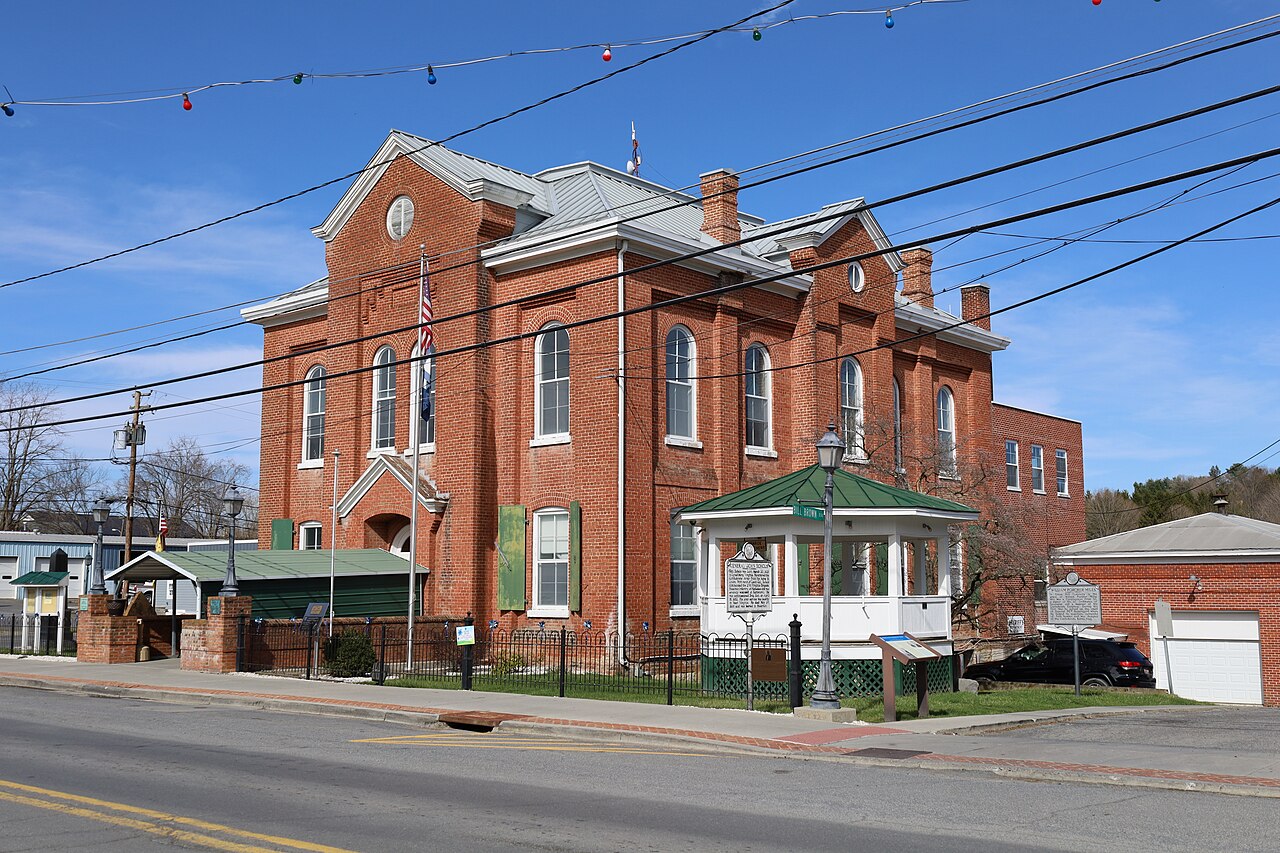
Begin with the Monroe County Courthouse, completed in 1881, and walk the surrounding streets to see buildings that reflect generations of local life. The Union Historic District is listed on the National Register of Historic Places.
Go deeper
The Monroe County Historical Society and Museum is an excellent starting point for records, photographs and exhibits. Check opening arrangements before visiting.
From county formation to a town charter
Monroe County was formed in 1799. A contemporary distinction matters: selection of the county-seat site and legal establishment of the town were separate steps. David E. Johnston’s history records the county court selecting land belonging to James Alexander in 1799, followed by the legislature establishing Union in January 1800. Visitors will therefore encounter both years in accounts of the town’s beginnings.
A town shaped by its streets
Early trustees specified two-story log houses on newly purchased lots. The Society of Architectural Historians notes how unusual that requirement was among early Virginia towns. Union grew as a place where county business and trade brought people together. Looking at the relationship between the courthouse, shops and surrounding homes reveals more than considering each building on its own.
The Union Historic District
The National Register listed the district on December 6, 1990. It extends along portions of Main, Dunlap, Pump and Elmwood streets and associated fields. Greek Revival, Queen Anne and Bungalow/Craftsman architecture represent different periods of growth. The register identifies commerce, Black history and architecture as areas of significance, with Matthew W. Clair Sr. named in the record. A complete account must include the people behind the buildings as well as their design.
Explore respectfully
Start outside the courthouse, then walk public sidewalks at your own pace. Historic designation does not make a private home, church or field open to visitors. Confirm museum and church access before building a visit around interiors. Ask the historical society about walking-tour material and research appointments.
How to research a Union family or building
Begin with a name, approximate date and location. Compare deeds, maps, census records, newspapers and photographs rather than relying on a single family story. Earlier records may use Virginia as the state name. The state archives’ Monroe County bibliography identifies county histories and archival inventories to consult. Older histories reflect the assumptions of their time; compare their accounts with original documents and later scholarship.
Sources and further reading
- David E. Johnston, A History of Middle New River Settlements, p. 135 (Library of Congress) — county-seat selection and town establishment.
- Society of Architectural Historians: Union — early town planning and architecture.
- National Park Service: Union Historic District, 90001844 — listing, boundaries and significance.
- West Virginia Archives: Monroe County bibliography — further research.
- West Virginia Encyclopedia: Union — courthouse and community overview.
Sources reviewed October 28, 2026. This guide will grow as additional records are checked.