
Cook’s Old Mill: A Countryside History Stop
At Cook’s Old Mill, the building is only part of the story. The pond, dam and channel carrying water away from the mill explain why this spot near Greenville became a place of work and exchange. Read the landscape alongside the timber structure and a countryside stop becomes an introduction to the machinery of everyday life in rural Monroe County.
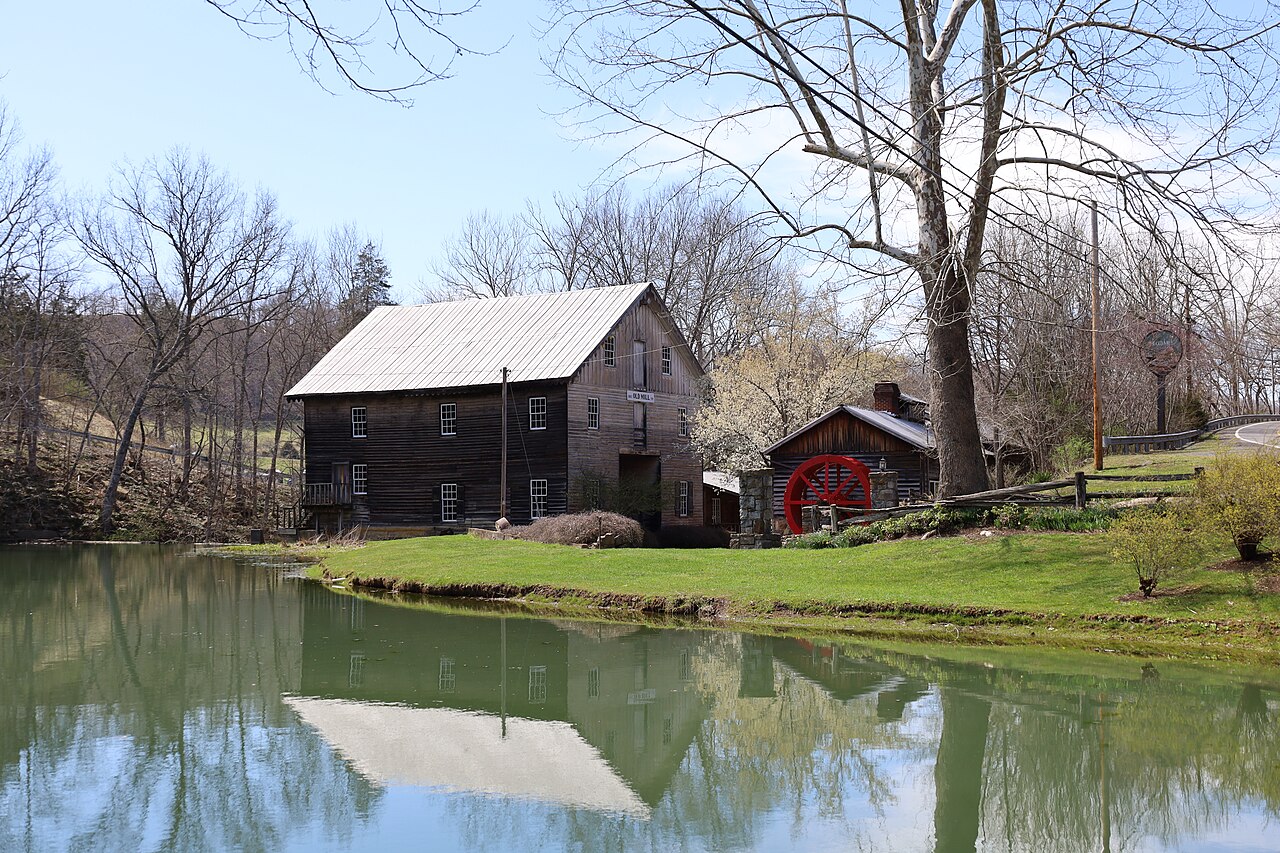

A working landscape, built around water
A gristmill connected a farm’s harvest to the food people could use. That practical purpose helps explain the mill’s place in its community: families needed grain processed, and a journey to the mill brought people to the same location. The National Register nomination also traces a local post-office connection to the mill, adding another reason that this was a place where news and business met.
The surviving structure dates to 1857, according to the National Register record. It replaced an earlier mill on the same site after a fire in about 1855. That distinction matters. The history of milling here reaches farther back than the building visible today; rebuilding continued an established use of the water and land rather than beginning an entirely new enterprise.
The nomination describes substantial hand-hewn posts and beams, joined with mortise-and-tenon construction. It also records water-powered equipment and systems that moved power through the building. Those details turn an old wooden structure into something easier to understand: a carefully organized workplace whose frame, floors and equipment had to function together.
Look beyond the front of the mill
For a first visit, make the water system your starting question. Where was water held, how was it directed toward the working equipment, and where did it return to the stream? The dam, pond and tailrace are parts of the same process. Even without an interior visit, understanding those relationships makes the setting more meaningful than an exterior photograph alone.
Inside, when a visit has been arranged, the scale of the framing offers another way into the story. Ask how the building’s different levels were used and how grain and power moved between them. A good mill visit follows a process from one part of the site to another. It does not need a long list of separate things to see.
The owners’ visitor invitation, reproduced by Travel Monroe, welcomes quiet enjoyment of the grounds and explains that interior access depends on availability. This remains a private property with its own visiting arrangements. A little preparation is worthwhile if seeing the machinery is the main reason for your trip.
Make this the countryside chapter of a day that begins with Union’s courthouse-town history. If the mill leaves you curious about other places where rural communities gathered, Old Rehoboth Church offers a different perspective. Our trip ideas explain how to give each stop room in your day.
Sources and photograph
History and construction: Cook’s Mill National Register nomination, hosted by the WV State Historic Preservation Office. Visitor arrangements: Travel Monroe. Reviewed October 28, 2026. Photo: Antony-22, CC BY-SA 4.0. Resized.